Monday, May 18, 2015

Apod 4.8

APOD 4.8
See Explanation.
Moving the cursor over the image will bring up an annotated version.
Clicking on the image will bring up the highest resolution version
available.
This picture is so astounding. It looks like a volcanoe erupting in the night sky. Even though that is the milky way galaxy, just the picture of a volcanoe is just so cool! This was taken in Hawaii at Mauna Kea. This picture also looks so cool because the ground is rocky then their is a cloudy landscape right under it. Also because they are above most of the layers of the atmosphere, it is easier to view space. The bright lights coming up frmo the clouds are the lights of the famous city Kiauea and Mauna Loa.

Friday, May 8, 2015

Apod 4.7

See Explanation.  Clicking on the picture will download
 the highest resolution version available.


This picture looks so amazing. When I imagine space I think of it as an ocean. A vast ocean that contains everything in the world. Coincidently it also has some of the same properties in it. For example there is no gravity in space or water, you cannot breathe in space, However there are some differences too. For example space you cannot move you will just fall, and space is very cold, and space contains billions of different objects. This picture for one is the whirlpool Galaxy. It follows he handle of the big dipper. It is one of the Messier objects, to be exact the 51st one. This galaxy is interesting, for example it has spiral arms and a magellenic cloud coming out from it. A cool thing about galaxies is that in the center there has to be something with enough gravity to forces everything into it. The only thing that has that much gravity is a black hole. That is why this picture looks like a tidal wave because the black hole is condeseing all this material into a certain spot. The spiral arms are just side effects created by the gravity. There is also what is called tidal debris, it is that white looking stuff coming out of the cloud and the arms. This debris helps stars form and makes a galaxy a galaxy.

Friday, May 1, 2015

Apod 4.6

                                                                                                                                Apod 4.6
See Explanation.  Clicking on the picture will download
 the highest resolution version available.

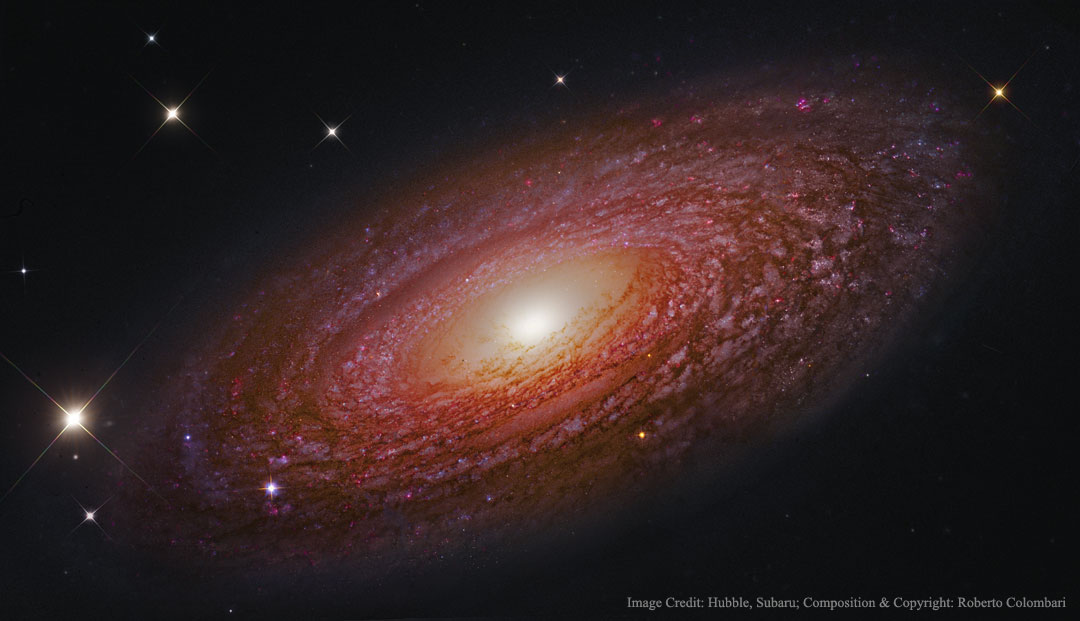
This is a massive nearby spiral galaxy. IT is cataloged NGC 2841. It was taken by the Hubble and Subaru telescope with Roberto Colombari. This galaxy is a whopping 46 million light-years distant. It is just above the constellation Ursa Major which is also called the bear. It also has a messier object in it. At our point of view we can see that this galaxy has a bright center, that is basically a nucleus of the entire thing. This galaxy's spiral arms are not as long as some other ones. For example, the sombrero galaxy. But going back to this galaxy, it has a diameter of over 150,000 light years. This picture is also not in visible light. This is because this galaxy is most likely blocked by interstellar matter, which is dust and other elements. Nonetheless this galaxy has a quaint but elegant halo on it. This picture is just so stellar. It looks like an explosion is about to happen. Like all the matter is coming into one spot then rebounds with an explosion. Much like how a red supergiant explodes. It gets so heavy that it cant contain every thing and reaches the chandraskar mass and then rebounds. With a supern ova explosion.

Monday, April 27, 2015

Apod 4.5

See Explanation.  Clicking on the picture will download
 the highest resolution version available.
APOD 4.5

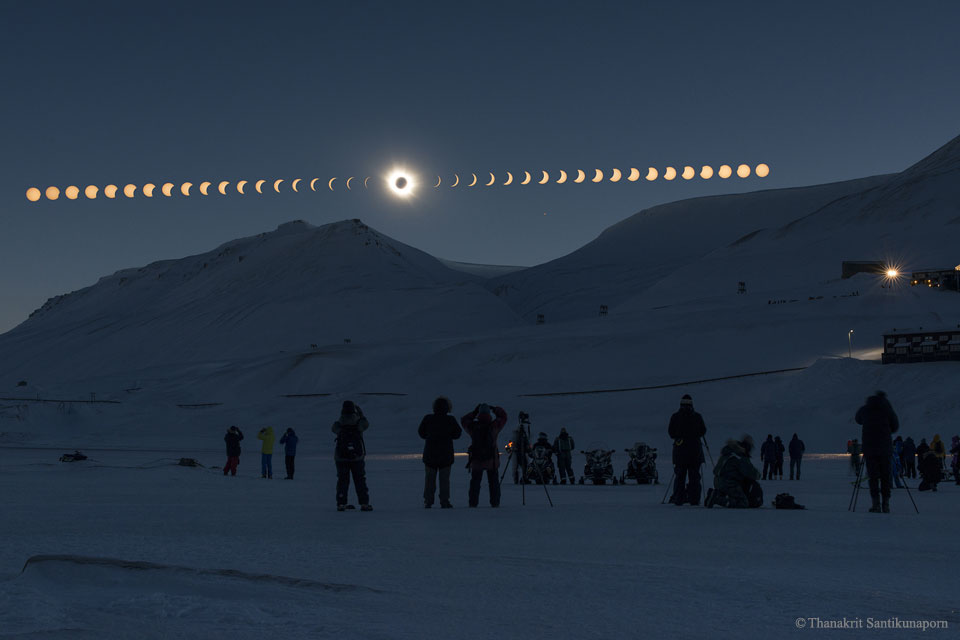
This extended shot of a total solar eclipse was taken over Svalbard, Norway. The picture had an interval of 3 minutes. It was a perfect interval, as you can see all the stages of the eclipse. Then the total eclipse looks like a gem in the sky. It is just so brilliant and elegant. This attraction was huge with eclipse seekers. Not only is this a rare event but it is also in a underpopulated place. The moon is the black dot in the middle. The shining ring around it is the suns corona. The suns corona is a peculiar aspect of it. In the layers of the sun it's supposed to get cooloer as it reaches its surface. It does, until it hits the corona, the corona layer heats up to 10 million Kelven. Thats 2/3 the way to fusion. The next total eclipse is going to happen in 2016 March. This will be visible form the Southeast Asia. Another cool aspect of this picture is that it has the lapse of each stage of the eclipse.

Friday, April 17, 2015

APOD 4.4

  See Explanation.  Clicking on the picture will download
 the highest resolution version available.
Giant Trees
This picture was taken by Niccolo Bonfadini. These giant pillars of snow and ice are not mounds of it. These are actually trees covered in snow and ice. To me they look like giant santa hats iwth the little ball at the top. This picture was taken in Finnish Lapland a few winters ago. One could percieve these treese to be aliens at night. These trees are truly very spooky and would be very cool (get it cause its cold) to see in person.


Friday, April 10, 2015

apod 4.3

Apod 4.3
See Explanation.  Clicking on the picture will download
 the highest resolution version available.

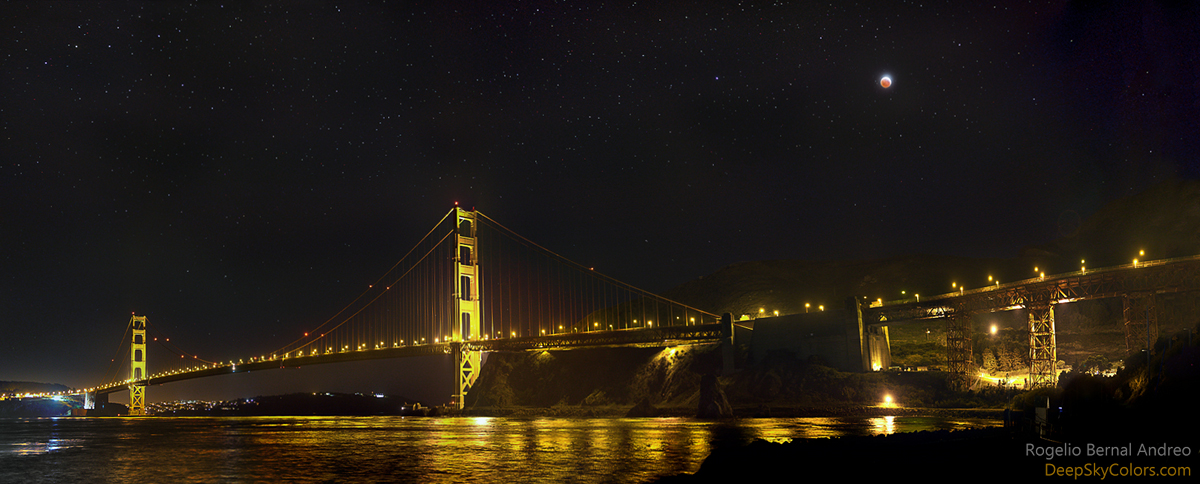
This picture must have been taken by a professional. It looks awe inspiring. ne can see the shadows play on the water and that is reflecting the lights from the brdge. Another cool aspect of this picture is the main attraction, the lunar eclpise. This is one of the four that have happened this year. It is the 3rd of the eclispse tetrad. This is one of the shortest lunar eclipse this century.

Thursday, April 2, 2015

APOD 4.2

OMG WE MIGHT BE SENDING COWS TO THE MOON
See Explanation.  Clicking on the picture will download
 the highest resolution version available.
Apparently scientists have been attempting to figure out how cows will survive on the moon. They also apparently have been studying this for decades. But after a long time they created the Lunar Grazing Model or LGM. The thing is, is that cows don't launch easily or cheaply, and there is no plan to launch cows into space yet. Astronomers think that rovers would be a more suitable way to explore planets. This picture is actually a sculpture called Mooooonwalk, which is apparently incredibly popular in museums. Btw NASA has not been planing to launch any cows into space, and this is an April Fools prank.

Friday, March 27, 2015

4.1

See Explanation.  Clicking on the picture will download
 the highest resolution version available.


This picture is just so beautiful. It shows the constellation Orion through the woods. The woods act like a frame for the constellation. Also one can see the two super red giants gleaming in the sky. These two red super giants are Alpha Orionis, the great star Betelgeuse and Alpha  Tauri, which is known as Aldebaran. Meaning that Alpha Tauri is in the constellation Taurus and Betelgeuse is in the constellation Orion. You can also see Orion's belt in this picture. also do you see that pink fuzzy stuff in the middle of the picture. That is a stellar nursery, where millions of stars are made, but only a few will make it to the main sequence.

Friday, March 6, 2015

Apod 3.7

See Explanation.  Clicking on the picture will download
 the highest resolution version available.

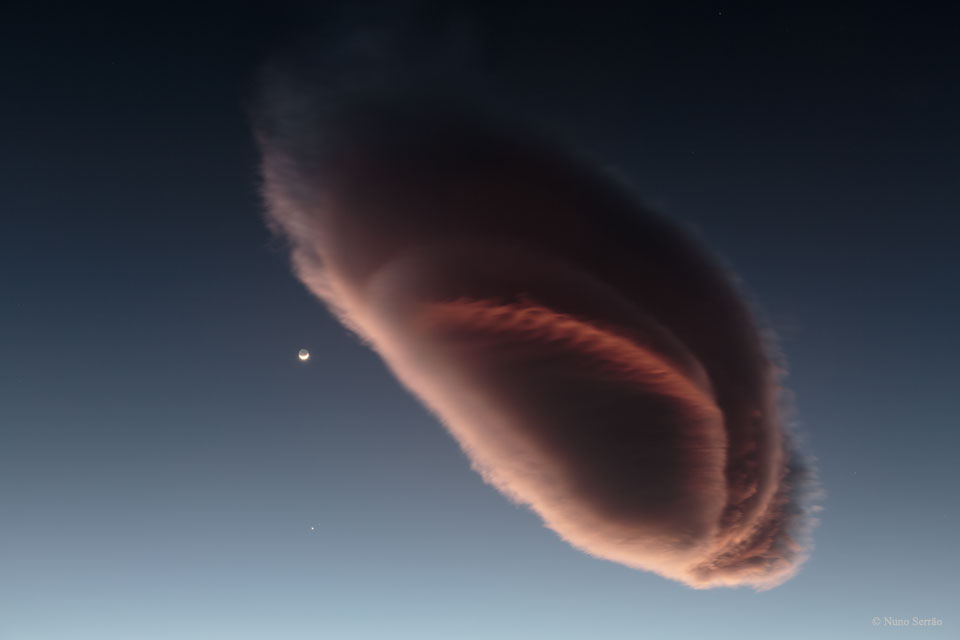
This is a lenticlar cloud photo bombing the Venus, Mars, Moon conjunction. These types of clouds form only in highly elevated areas. So I won't be seeing any, anytime soon. This cloud may be a photobomber, but it adds more character to the picture.  A fun fact is that most lenticular clouds are mistaken for UFO's. These clouds are formed by layers of clouds on layers of clouds. It was taken on Madeira Island in Portugal. Also if u can see it midway down to the left is a little twinkle, that is Venus. While the cloud is covering Mars. This picture was taken by Nuno Serrao with an accent on te a. The next conjunction will appear in late august, so this really is a rare event.

Thursday, March 5, 2015

Biography Q3


Camille Flammarion

Flammarion was born on 1842, February 26, in  France. When he was a student he studied astronomy from 1858 - 1862. After fourteen years Flammarion went to the Paris Observatory for six years. After he was finished with Paris Observatory he built the Juvisy Observatory. He also in 1892, founded the French Astronomical Society. Even though he was an astronomer he was also a scientist, he did multiple experiments on the upper atmosphere because he needed more research for double or multiple stars and the topography of Mars. Because of his many findings France awarded him the Legion of Honor, this award is one of Frances highest nonmilitary award.

Flammarion first was introduced into the physical phenomena world when he met Allan Kardec in 1861. Flammarion was writing his book The Plurality of Inhabited Worlds, when he was invited to join the society  for Phycological studies, which he joined. At this society Flammarion created many phrases that related to astronomy, he later was promoted to cheif Parisian spiritistic circles and realized that this society is a joke and left it. Later, in 1865, he published a book about the invisible force that was gravity, it was called Des Forces Naturelles inconnues. He later went around to disprove that ghosts are true.

Flammarion died at the Juvisy Observatory, Paris, on June 3, 1925. Then a "spiritualist" claimed that his name was Egoland in the spirit world.

Monday, March 2, 2015

Planetary Nebulae Research

NGC 6210 HST.tifNGC 6210

Constellation: Hercules


Distance: 4700 Light Years


Size: .36519 Radians


Ngc3242b.jpg

NGC 3242

Constellation: Hydra

Distance: 1400 Light Years

Size: .27195 Radians

Fun Fact: Called Ghost of Jupiter. Has two different angular arc seconds. Discovered by William Herschel.

Ngc2392.jpgNGC 2392

Constellation: Gemini


Distance: 2900 Light Year


Size: .67599 Radians


Fun Fact: Called the Eskimo Nebulae

NGC 7293
Comets Kick up Dust in Helix Nebula (PIA09178).jpg

Constellation: Aquarius

Distance: 650 Light Years

Size: 6.31 X 10^-4 Radians

Fun Fact: Called Helix Nebulae. Is the closest  nebulae to
Earth.

NGC 650
M76-RL5-DDmin-Gamma-LRGB 883x628.jpg

Constellation: Perseus

Distance: 3400 Light Years

Size: .7 Light Years

Fun Fact: Called the little dumbbell. Has another NGC in
M97.jpgit.

NGC 3587

Constellation: Ursa Major

Distance: 2600 Light Years

Size: .042929 Radians

Fun Fact: Has M97 in it. Called the owl nebulae.
Planetary Nebula M2-9.jpg
Twin Jet Nebulae

Constellation: Ophicuchus

Distance: 2100 Light Years

Size: .6 Light Years

Fun Fact: Contains M2-9


Footprint Nebulae

Constellation: Cygnus

Distance: 15000 Light years

Size


Friday, February 20, 2015

Quarter 3 Camille Flammarion Sources

Source 1

Source 2

APod 3.5


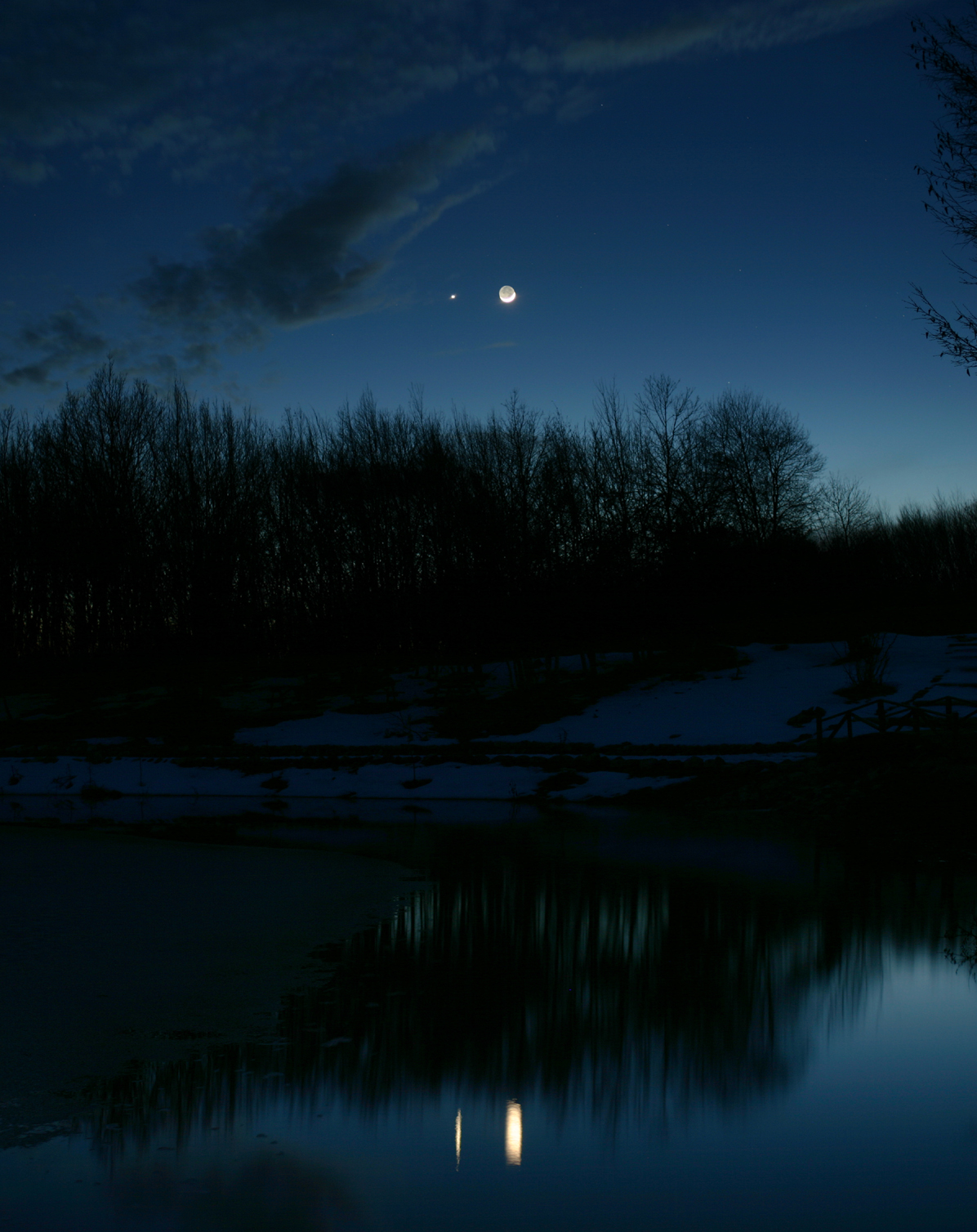
20070219Tezel.jpg (1196×1508)This picture is just so amazing. One can see the Moon and Venus on the same plane right next to each other. Venus looks just as bright as the moon because it is the brightest planet in our solar system. Another amazing detail is the reflection of the water. This was taken in Bolu Turkey. Surprisingly this picture was taken eight years ago in 2007. In the time Venus has orbited the sun approximately thirteen times. WOW!. This picture can only be taken every eight years when the moon and Venus are at conjunction. So we were very lucky to catch this uncommon experience when it was not cloudy or rainy. Another interesting fact is that the moon gets its light from the reflecting sun beams from the Sun. This allows it to portray itself as a bright object and not just a dark patch in the sky. In a few days another planet will march its way toward Venus and the moon. This planet is Mars. The god of war from Greece mythology. Thank for reading this blog and see you again next week.

Friday, February 13, 2015

APOD 3.4

See Explanation.  Clicking on the picture will download
 the highest resolution version available.

This is two galaxies colliding together . It is called the Antennae. The two stars in the galaxy is NGC 4038 and NGC 4039. Near the center is cosmic wreckage that spans 500K thousand light years. This picture jsut looks so stunning awe inspiring. They are like this because of the gavitational tide forces that they act on each other. It is a rare sight to see.

Thursday, February 12, 2015

Classwork 2/12/15

Star formation regions.


http://www.youtube.com/watch?v=80eMTnnLjhs

http://phys.org/news149951713.html
Image result for star formationImage result for star formation

Stellar Nurseries
http://www.ibtimes.com/prawn-nebula-massive-stellar-nursery-teeming-young-stars-photos-1407384

http://www.youtube.com/watch?v=ot4WHQ6o42s

http://www.nasa.gov/multimedia/imagegallery/image_feature_2409.html

http://svs.gsfc.nasa.gov/cgi-bin/details.cgi?aid=11477

Protostar
Image result for protostarImage result for protostarhttp://www.youtube.com/watch?v=iL4J0O-b-OY

Cloud Collapse
Image result for cloud collapseImage result for cloud collapse
http://www.youtube.com/watch?v=YbdwTwB8jtc

http://vimeo.com/14139433