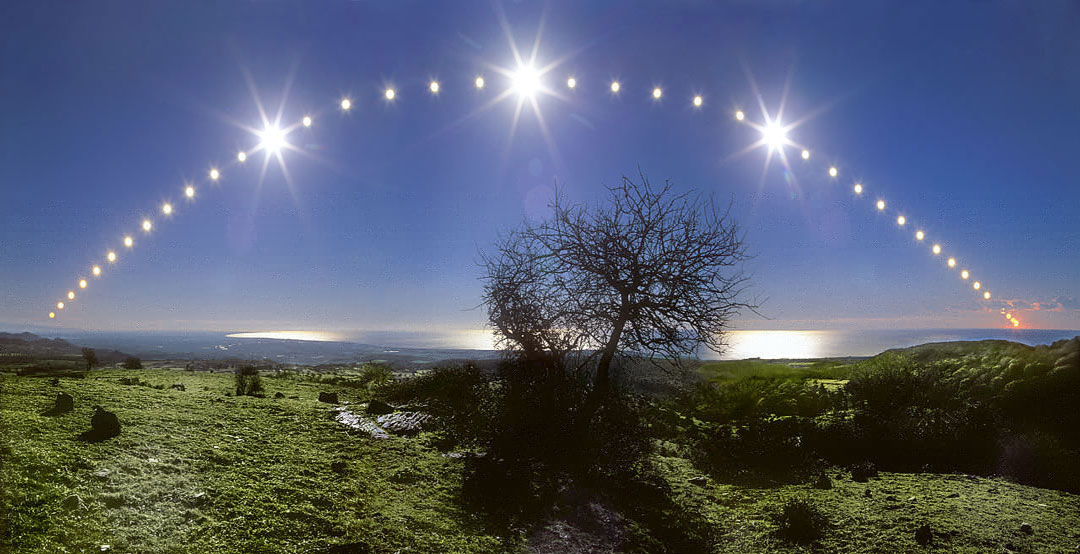
This is a picture of the solstice that occurred at 23:03 Universal time on December twenty-first 2014. This is when the sun reaches its southern most declination with respect to Earth. The solstice marks the beginning of winter in the northern hemisphere and summer in the south. In the picture, the sun will mae its lowest arc. That is what the dots mean. This picture was taken at an elevation that looks down at the Tyrrhenian Sea coast. The town they are located is Santa Severa toward Fiumicino, Italy. This picture absolutely stunning though. The bright suns represent important astronomical dates.
Friday, January 9, 2015
APOD 2.6
This is a picture of the solstice that occurred at 23:03 Universal time on December twenty-first 2014. This is when the sun reaches its southern most declination with respect to Earth. The solstice marks the beginning of winter in the northern hemisphere and summer in the south. In the picture, the sun will mae its lowest arc. That is what the dots mean. This picture was taken at an elevation that looks down at the Tyrrhenian Sea coast. The town they are located is Santa Severa toward Fiumicino, Italy. This picture absolutely stunning though. The bright suns represent important astronomical dates.
Wednesday, January 7, 2015
George Airy Biography
George Airy had a family of six,
William Airy his father and Ann Biddell his mother. George was born and raised
by farmers. He attended Byatt Walker's school at Colchester and his classmates
disliked him. George did not let this hold him back, in school he learned
arithmetic, double-entry bookkeeping, and the use of the slide rule. At a young
age he invented many toys he played with, for example, a pea shooter. Georges
uncle Arthur Biddell "helped" George by kidnapping him for George to
avoid financial difficulties. George spent six years with his uncle, from 1814
to 1819. With this much time he created a connection with his uncle. He
attended Trinity College in 1819. George Airy hoarded documents. He would keep
checks, notebooks, diaries, math problems, and about any kind of document. Airy
married Miss Smith White while he was touring Derbyshire. He proposed to her
six years before marrying her. George was a very smart man and when the Cambridge
University became vacant in 1828, he told everyone that he was being paid
little, this took the University by storm and he got his salary raised from 200
Euros to 500 Euros. He retired as an astronomer in 1881 and was knighted in
1872. Airy wrote an autobiography about himself and created a lot of documents
that we could follow his entire life by.
George was very organized and knew his role and the role played by the Royal
Greenwich Observatory.
John Flamstead gave George a lead
to invent a way to navigate precisely
and accurately. He proposed an idea that one could use the stars to navigate
safely. This idea was introduced by other countries, and helped merchant fleets
travel safely and correctly. George was able to sustain his official career
because he knew his place, he didn't upset his masters. He recognized the task
ahead and made the Royal Greenwich Observatory into an institution that lead
scientific discovery. He stated to the people
that they have done a lot in the lower branches in astronomy but have done
nothing in the higher branches of astronomy. George Airy is speculated to have
discovered Neptune. Airy supplied all the major participants in this discovery
with the data he requested. After a young mathematician came to him unannounced saying that Neptune is real and had to exist for the motions of the other planets. Because of Airy's efficiency in the observatory, he was noted by the
government as a prototype of the modern government scientist. Because of this
he was able to make very little observations afterwards.
George was not powerful or built,
because of this he started to age and shrink. This was mainly because of an
increasing stoop. At age eighty-five his health was great, but his mind took a
toll on him. He was not into sports or competitions of any sort, however he was
an active walker and could endure a lot of fatigue. He invented the astigmatism
with a cylindrical lens. He was inspired to invent this because of his huge
curiosity of his eyes. This method is still used today. He also created the
numerical lunar theory. This theory consisted of observations of the numerical
values of the 320 periodic terms in Delaunay's equations for the moons motions.
George had many great difficulties,
one of them was that he was not a great scientist, but could make great science
possible. He drew the British observational astronomy into a cul de sac which
took numerous years to retreat from.
Friday, December 19, 2014
George Airy Sources
http://go.galegroup.com/ps/retrieve.do?sgHitCountType=None&sort=RELEVANCE&inPS=true&prodId=GVRL&userGroupName=fl_sarmddl&tabID=T003&searchId=R4&resultListType=RESULT_LIST&contentSegment=&searchType=BasicSearchForm¤tPosition=1&contentSet=GALE%7CCX3411400012&&docId=GALE|CX3411400012&docType=GALE
http://go.galegroup.com/ps/retrieve.do?sgHitCountType=None&sort=RELEVANCE&inPS=true&prodId=GVRL&userGroupName=fl_sarmddl&tabID=T003&searchId=R4&resultListType=RESULT_LIST&contentSegment=&searchType=BasicSearchForm¤tPosition=6&contentSet=GALE%7CCX3408502785&&docId=GALE|CX3408502785&docType=GALE
http://go.galegroup.com/ps/retrieve.do?sgHitCountType=None&sort=RELEVANCE&inPS=true&prodId=GVRL&userGroupName=fl_sarmddl&tabID=T003&searchId=R3&resultListType=RESULT_LIST&contentSegment=&searchType=BasicSearchForm¤tPosition=2&contentSet=GALE%7CCX3437800326&&docId=GALE|CX3437800326&docType=GALE
http://go.galegroup.com/ps/retrieve.do?sgHitCountType=None&sort=RELEVANCE&inPS=true&prodId=GVRL&userGroupName=fl_sarhs&tabID=T003&searchId=R3&resultListType=RESULT_LIST&contentSegment=&searchType=BasicSearchForm¤tPosition=1&contentSet=GALE%7CCX2830900062&&docId=GALE|CX2830900062&docType=GALE
http://go.galegroup.com/ps/retrieve.do?sgHitCountType=None&sort=RELEVANCE&inPS=true&prodId=GVRL&userGroupName=fl_sarmddl&tabID=T003&searchId=R4&resultListType=RESULT_LIST&contentSegment=&searchType=BasicSearchForm¤tPosition=6&contentSet=GALE%7CCX3408502785&&docId=GALE|CX3408502785&docType=GALE
http://go.galegroup.com/ps/retrieve.do?sgHitCountType=None&sort=RELEVANCE&inPS=true&prodId=GVRL&userGroupName=fl_sarmddl&tabID=T003&searchId=R3&resultListType=RESULT_LIST&contentSegment=&searchType=BasicSearchForm¤tPosition=2&contentSet=GALE%7CCX3437800326&&docId=GALE|CX3437800326&docType=GALE
http://go.galegroup.com/ps/retrieve.do?sgHitCountType=None&sort=RELEVANCE&inPS=true&prodId=GVRL&userGroupName=fl_sarhs&tabID=T003&searchId=R3&resultListType=RESULT_LIST&contentSegment=&searchType=BasicSearchForm¤tPosition=1&contentSet=GALE%7CCX2830900062&&docId=GALE|CX2830900062&docType=GALE
Friday, December 5, 2014
Apod 2.5
APOD 2.5
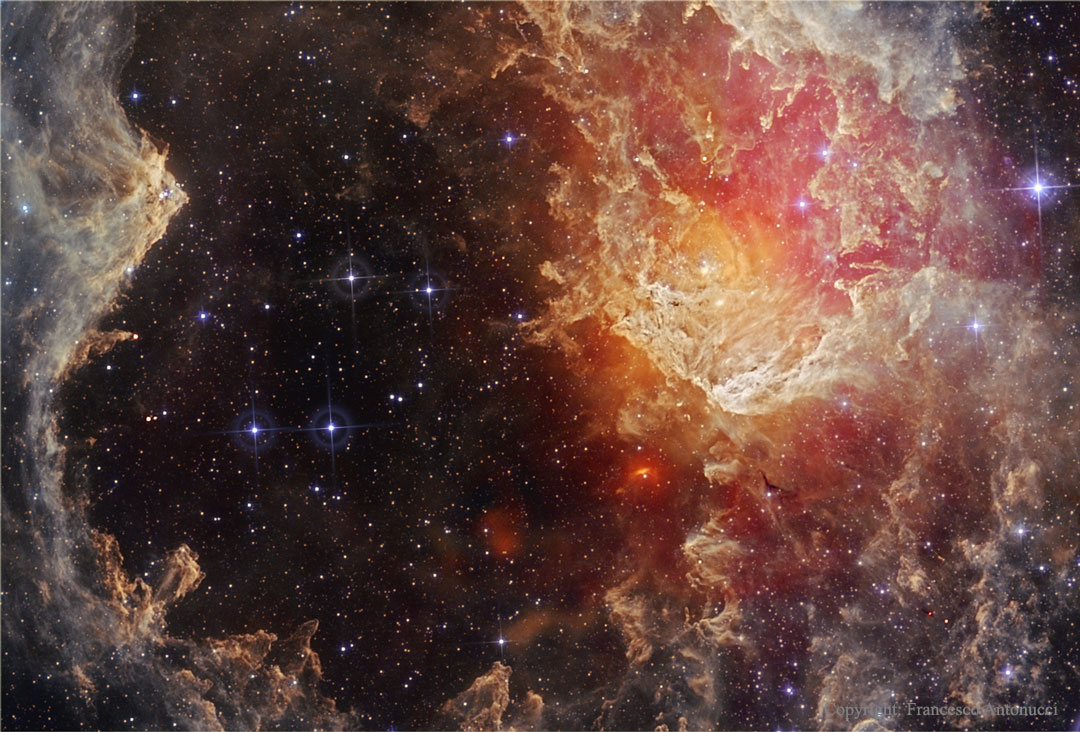
This amazing picture is made up of young stars and cosmic pillars of gas and dust. The reddish lighting to the right is NGC 7822, it looks like the objects have covered it in a way that makes it look 10x as better. One is also able to see Cepheus the King, the constellation. Cepheus is circumpolar and looks like a house. This picture was taken in infrared light by NASA's Wide Field Infrared Survey Explorer (WISE). The "clouds" are powered by a stars, in this case The Sun, emitting energetic radiation An interesting fact is that in these pillars of heat, stars can be born. This picture may look like a small fraction of the sky, however in reality it spans around forty light-years and that is also the estimated distance of NGC.
Friday, November 21, 2014
APOD 2.4
APOD 2.4
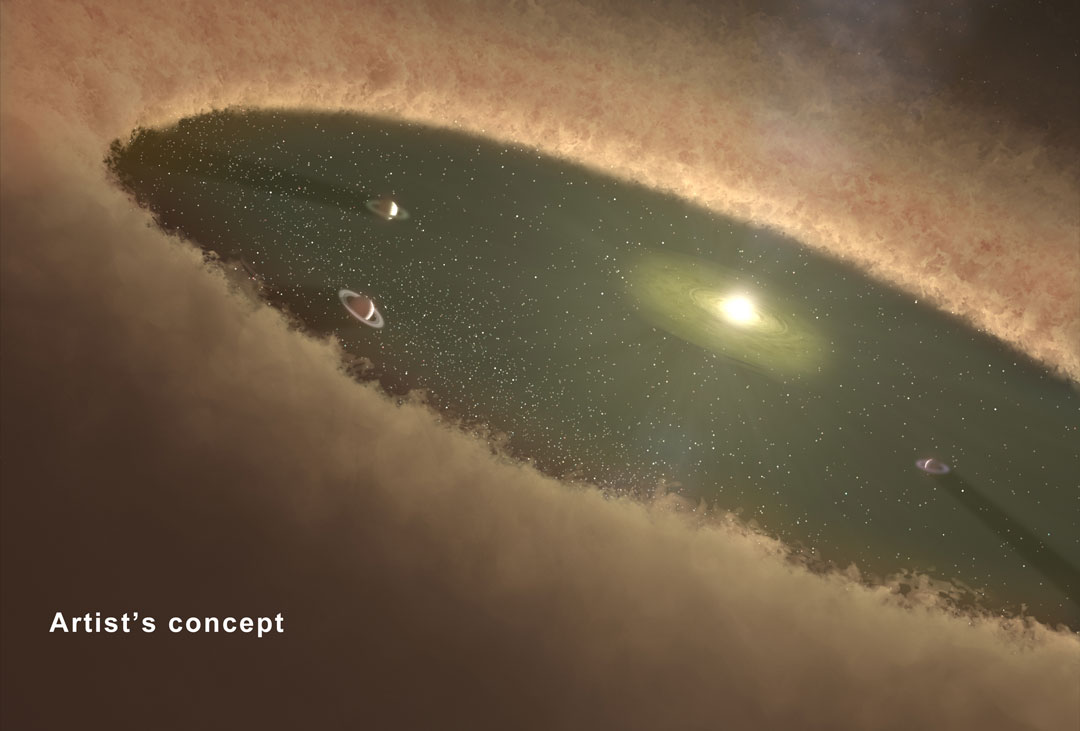
This is an artist's rendition of a dusk disk. It was made to discover what other solar systems look like. It could look like ours or the planets could be in a vertical row revolutionizing at the same time. Dusk disks are made from nearby stars and can only be seen when using infrared. The idea of making this picture was from the NASA Spitzer Space Telescope and ESA's Herschel Space Observatory. In this painting there are two dusk disks, one made by parent star other is farther out. You can see it in this picture, the bright golden dot is the parent star, while the outside is the other dust disk. They are made when planets repel and absorb dust from their gravity. The star here is the HD 95086, it is a blue star and is 60% more massive than our sun. You can see this star with binoculars if you look at the constellation Carina.
Friday, November 14, 2014
APOD 2.3
APOD 2.3
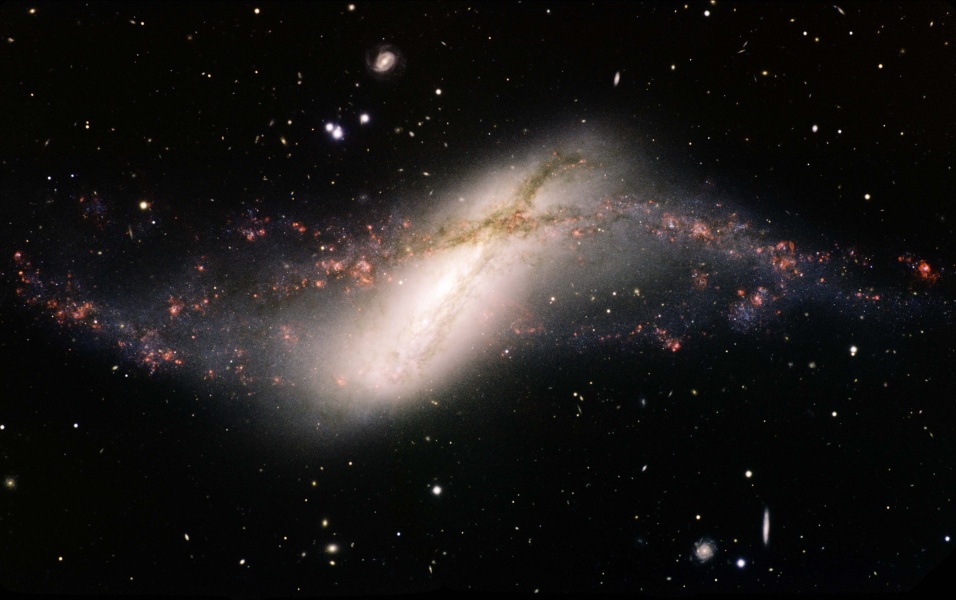
This is a snapshot from the Gemini North telescope. This amazing snapshot was of the Polar Ring Galaxy or NGC 660. The Gemini telescope has a sharp composite of broad and narrow band filter, making this image even more amazing than it is. A cool fact is that Polar Ring Galaxies are seldom and have a substantial population of starts, gas, and dust orbiting in rings close to the galactic disk. This looks soo amazing partly because of the bizarre-looking configuration caught materials from a nearby galaxy passing through this one. The polar ring component can also be used to explore the shape of the galaxy's that cant be seen such as the dark mater halo. Also the gravitational pull from this galaxy is the reason for the myriad pinkish star forming regions along the NGC 660.
Friday, November 7, 2014
Apod 2.2
APOD 2.2
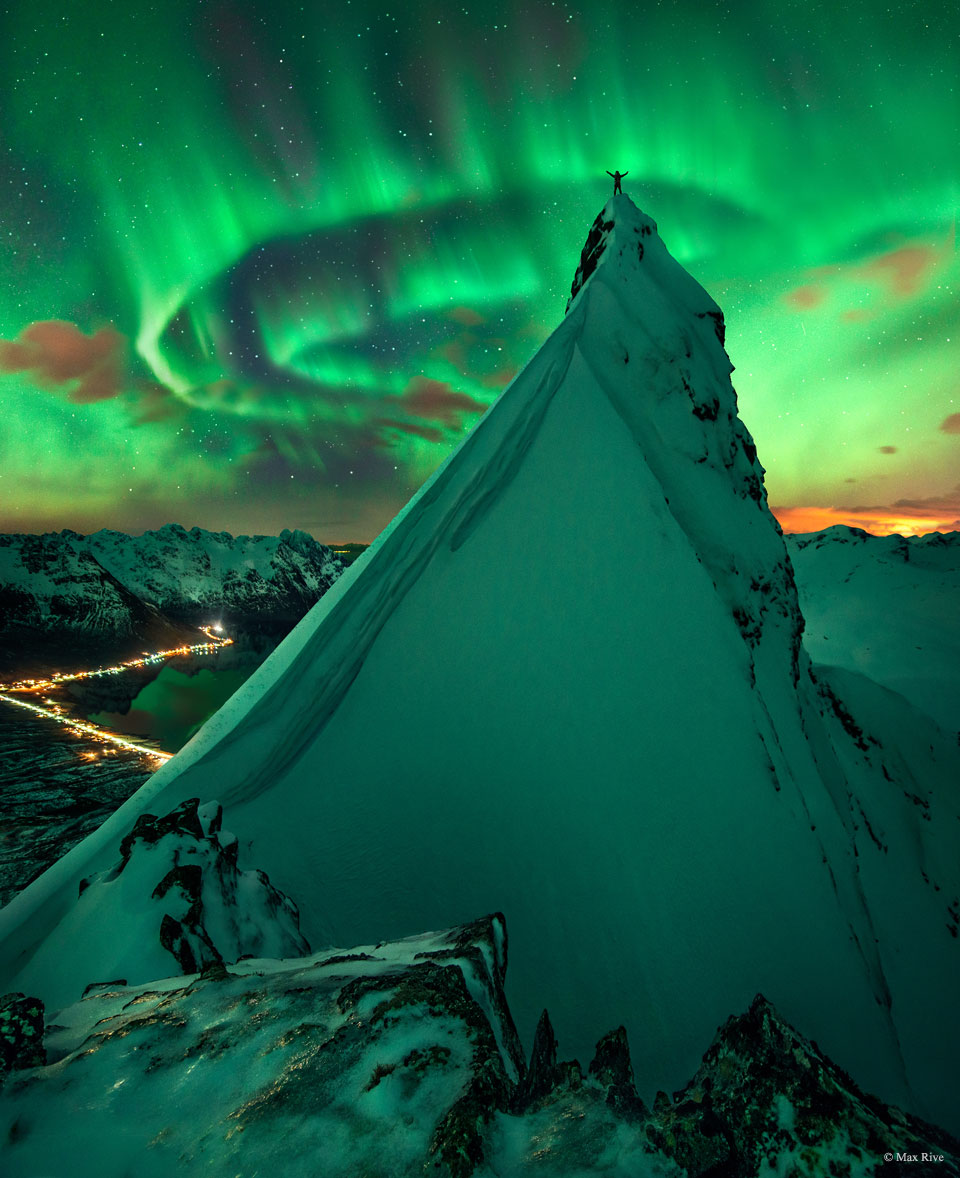
This is an aurora in Norway. The people that were taking this photo had tried three times. The first two nights it was to cloudy, however the last night, there was an aurora with little clouds. This was surely a spectacular event for the people of Norway. I wish I could have been there with them. This was probably very dangerous because the man is standing on the pinnacle of the mountain. An aurora is created when the electromagnetic waves are disrupted creating a colorful display. The area this was taking place was the Austnesfjorden fjord, which is close to the town of Svolvear on the Lofoten islands in the North. Also the sun has an eleven year magnetic cycle.
Subscribe to:
Posts (Atom)