Thursday, March 5, 2015

Biography Q3


Camille Flammarion

Flammarion was born on 1842, February 26, in  France. When he was a student he studied astronomy from 1858 - 1862. After fourteen years Flammarion went to the Paris Observatory for six years. After he was finished with Paris Observatory he built the Juvisy Observatory. He also in 1892, founded the French Astronomical Society. Even though he was an astronomer he was also a scientist, he did multiple experiments on the upper atmosphere because he needed more research for double or multiple stars and the topography of Mars. Because of his many findings France awarded him the Legion of Honor, this award is one of Frances highest nonmilitary award.

Flammarion first was introduced into the physical phenomena world when he met Allan Kardec in 1861. Flammarion was writing his book The Plurality of Inhabited Worlds, when he was invited to join the society  for Phycological studies, which he joined. At this society Flammarion created many phrases that related to astronomy, he later was promoted to cheif Parisian spiritistic circles and realized that this society is a joke and left it. Later, in 1865, he published a book about the invisible force that was gravity, it was called Des Forces Naturelles inconnues. He later went around to disprove that ghosts are true.

Flammarion died at the Juvisy Observatory, Paris, on June 3, 1925. Then a "spiritualist" claimed that his name was Egoland in the spirit world.

Monday, March 2, 2015

Planetary Nebulae Research

NGC 6210 HST.tifNGC 6210

Constellation: Hercules


Distance: 4700 Light Years


Size: .36519 Radians


Ngc3242b.jpg

NGC 3242

Constellation: Hydra

Distance: 1400 Light Years

Size: .27195 Radians

Fun Fact: Called Ghost of Jupiter. Has two different angular arc seconds. Discovered by William Herschel.

Ngc2392.jpgNGC 2392

Constellation: Gemini


Distance: 2900 Light Year


Size: .67599 Radians


Fun Fact: Called the Eskimo Nebulae

NGC 7293
Comets Kick up Dust in Helix Nebula (PIA09178).jpg

Constellation: Aquarius

Distance: 650 Light Years

Size: 6.31 X 10^-4 Radians

Fun Fact: Called Helix Nebulae. Is the closest  nebulae to
Earth.

NGC 650
M76-RL5-DDmin-Gamma-LRGB 883x628.jpg

Constellation: Perseus

Distance: 3400 Light Years

Size: .7 Light Years

Fun Fact: Called the little dumbbell. Has another NGC in
M97.jpgit.

NGC 3587

Constellation: Ursa Major

Distance: 2600 Light Years

Size: .042929 Radians

Fun Fact: Has M97 in it. Called the owl nebulae.
Planetary Nebula M2-9.jpg
Twin Jet Nebulae

Constellation: Ophicuchus

Distance: 2100 Light Years

Size: .6 Light Years

Fun Fact: Contains M2-9


Footprint Nebulae

Constellation: Cygnus

Distance: 15000 Light years

Size


Friday, February 20, 2015

Quarter 3 Camille Flammarion Sources

Source 1

Source 2

APod 3.5


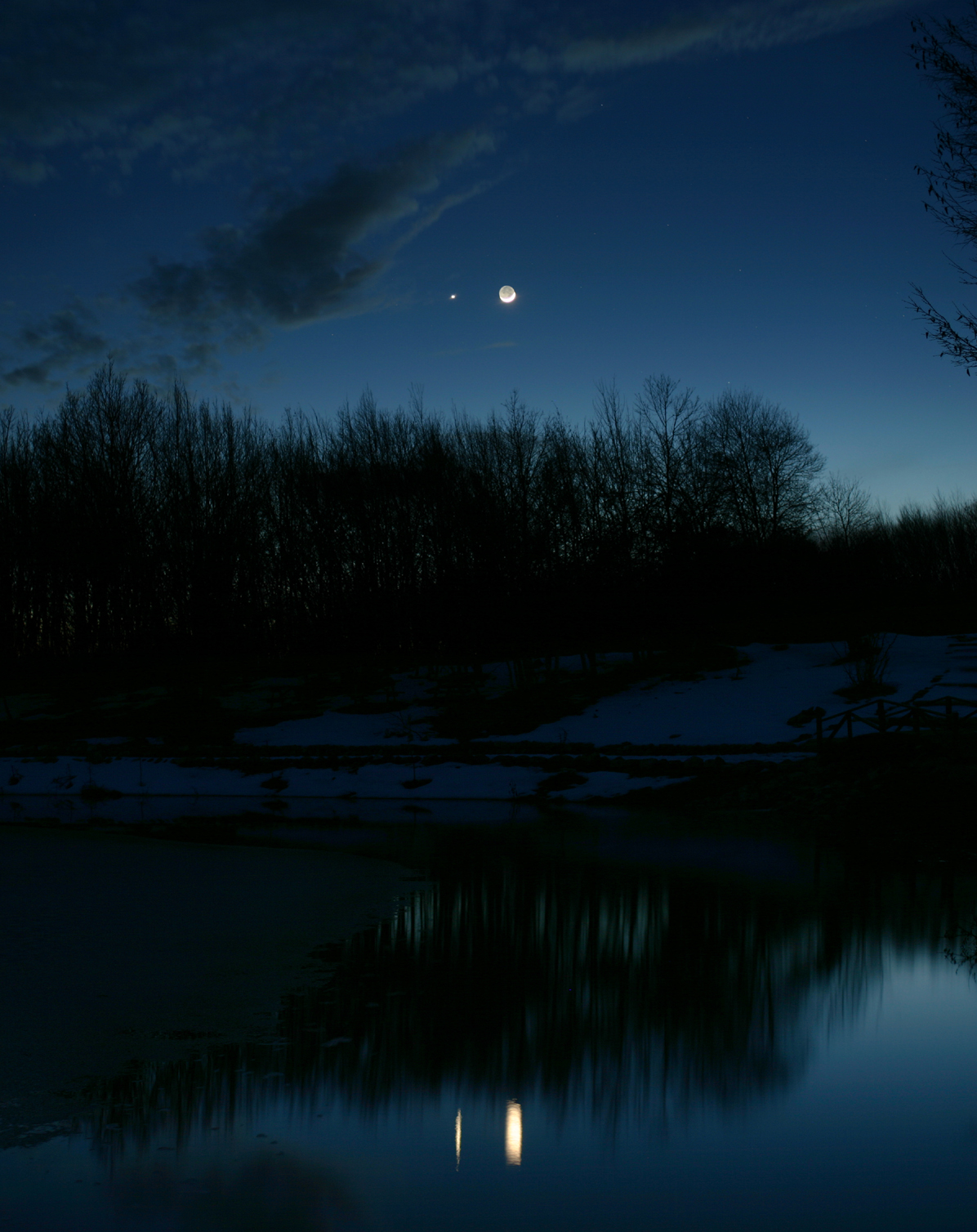
20070219Tezel.jpg (1196×1508)This picture is just so amazing. One can see the Moon and Venus on the same plane right next to each other. Venus looks just as bright as the moon because it is the brightest planet in our solar system. Another amazing detail is the reflection of the water. This was taken in Bolu Turkey. Surprisingly this picture was taken eight years ago in 2007. In the time Venus has orbited the sun approximately thirteen times. WOW!. This picture can only be taken every eight years when the moon and Venus are at conjunction. So we were very lucky to catch this uncommon experience when it was not cloudy or rainy. Another interesting fact is that the moon gets its light from the reflecting sun beams from the Sun. This allows it to portray itself as a bright object and not just a dark patch in the sky. In a few days another planet will march its way toward Venus and the moon. This planet is Mars. The god of war from Greece mythology. Thank for reading this blog and see you again next week.

Friday, February 13, 2015

APOD 3.4

See Explanation.  Clicking on the picture will download
 the highest resolution version available.

This is two galaxies colliding together . It is called the Antennae. The two stars in the galaxy is NGC 4038 and NGC 4039. Near the center is cosmic wreckage that spans 500K thousand light years. This picture jsut looks so stunning awe inspiring. They are like this because of the gavitational tide forces that they act on each other. It is a rare sight to see.

Thursday, February 12, 2015

Classwork 2/12/15

Star formation regions.


http://www.youtube.com/watch?v=80eMTnnLjhs

http://phys.org/news149951713.html
Image result for star formationImage result for star formation

Stellar Nurseries
http://www.ibtimes.com/prawn-nebula-massive-stellar-nursery-teeming-young-stars-photos-1407384

http://www.youtube.com/watch?v=ot4WHQ6o42s

http://www.nasa.gov/multimedia/imagegallery/image_feature_2409.html

http://svs.gsfc.nasa.gov/cgi-bin/details.cgi?aid=11477

Protostar
Image result for protostarImage result for protostarhttp://www.youtube.com/watch?v=iL4J0O-b-OY

Cloud Collapse
Image result for cloud collapseImage result for cloud collapse
http://www.youtube.com/watch?v=YbdwTwB8jtc

http://vimeo.com/14139433

Friday, February 6, 2015

APOD 3.3


See Explanation.  Clicking on the picture will download
 the highest resolution version available.

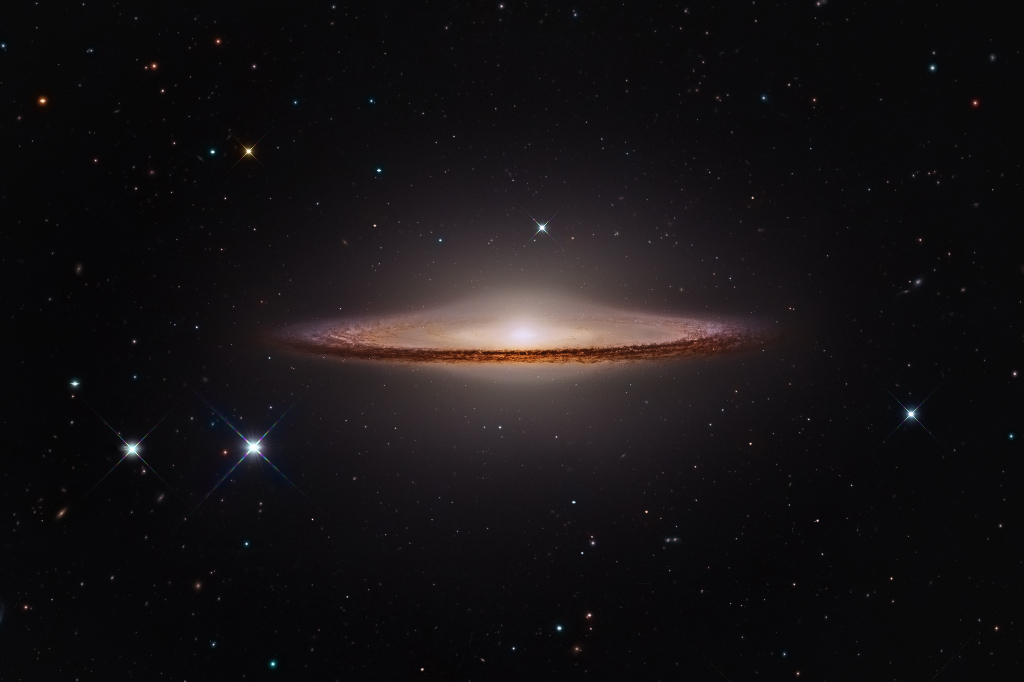
This is M104 and it is The Sombrero Galaxy, it is named that because it resembles a sombrero. M104 is right after M103, which is in the constellation Cassiopeia. M104 is famous for its edge, it features a broad ring of obscuring dust lanes. Because of its overwhelming glare, some of the color coding couldn't color the image. This galaxy is in every spectrum: Radio, Infrared, Visible Light, Ultra-Violet, X-Ray, and Gama rays. It is speculated to hold a super massive black hole. This black is around 50,000 light years across and 28 million light years away. It is also one of the  largest galaxies at the southern edge of the Virgo Galaxy luster.